


Disclaimer: This blog post is for informational purposes only and does not constitute legal advice. Please consult an attorney for guidance on specific laws regarding Remote Online Notarization (RON), digital signatures, and related legal matters. As laws concerning RON and notarization are subject to frequent changes, it is advisable to verify current regulations with your local government.
If you need to get a document notarized, you have several options including banks, UPS Stores, law offices, mobile notaries, and online notarization platforms. Many people search for where to get something notarized near them because they need fast, same-day service for documents like affidavits, powers of attorney, real estate paperwork, vehicle titles, and business forms.
Today, online notarization also allows many documents to be notarized remotely from your phone or computer without visiting an office in person. This guide explains where you can get documents notarized, how much it typically costs, what to bring, and which option may work best for your situation.
What Does It Mean to Get Something Notarized?
Before diving into where to go, it helps to understand what notarization actually involves. A notary public is a state-commissioned official authorized to witness the signing of important documents, verify the identity of the signers, and apply an official seal or stamp confirming the notarization took place.
It’s worth noting that a notary’s role is generally not to review the legal content of your document. Their job is typically to confirm that you are who you say you are, that you signed willingly, and that the signing was properly witnessed. This process can help deter fraud and may lend documents an additional layer of authenticity that many institutions, courts, and agencies often require.
Documents that commonly require notarization include powers of attorney, affidavits, real estate deeds, loan documents, wills and trusts, adoption papers, vehicle titles, and certain business contracts. If you’re unsure whether your document needs to be notarized, the institution or party requesting it can usually clarify that for you.
Where Can I Get Something Notarized Near Me?
Most people can get a document notarized through one of five channels: a bank or credit union, a retail shipping store like UPS, a law office or legal service provider, a mobile notary, or a remote online notarization (RON) platform. Here’s a closer look at each.
**Always verify that the notary you use is properly commissioned and authorized to perform notarizations in your state.
Banks and Credit Unions
For many people, a bank or credit union tends to be the first and most affordable place to look. Many financial institutions offer notary services to account holders at little or no charge, making this one of the more cost-effective routes for routine documents.
What to Expect
Not every branch has a notary on staff at all times, and availability can vary by location and day of the week. Calling ahead before you make the trip is generally a good idea. When you reach someone, ask whether notary services are available for your account type, whether an appointment is required, and what kinds of documents they can typically handle. Some banks may have restrictions on the types of notarizations they perform.
If notary services are available to you as an account holder, fees are often minimal, though some institutions may charge a small per-signature fee. It’s also worth asking whether your specific account type qualifies for a waiver.
Tips for a Smooth Appointment
Bring a valid, government-issued photo ID such as a driver’s license or passport. Do not sign your document in advance. Notaries are generally required to witness the signing in person, so arriving with a pre-signed document may mean the notarization cannot be completed. If your document requires witnesses, they will typically need to be physically present as well.
The UPS Store
UPS Store locations can be a widely available option that many people turn to when their bank isn’t convenient or doesn’t have a notary on hand. Many locations offer extended hours including weekends, and walk-in appointments are often welcome.
Availability and Cost
UPS Store notary availability can vary by location, so calling your nearest store before making the trip is a good habit. Fees tend to run a bit higher than at a bank, often several dollars per signature, and the store may charge separately for any printing or copying services you need.
What to Bring
As with any in-person notarization, bring your unsigned document and a valid government-issued photo ID. If your document type requires witnesses, checking with the store in advance about whether they can accommodate that requirement is worth a quick phone call.
One practical note: UPS Stores can typically notarize a wide range of general documents, but they may not be set up to handle highly specialized legal instruments. If your document is complex or carries significant legal weight, a law office may be worth considering.
Law Offices and Legal Service Providers
Law offices are sometimes overlooked as a notarization option, but they can be a smart choice when your document is legally complex or when you’d benefit from having a professional in the room when you sign.
When a Law Office May Make Sense
If you’re dealing with a real estate transaction, a business agreement, an estate planning document, or any situation where legal guidance could be valuable, pairing notarization with an attorney consultation may offer meaningful peace of mind. Attorneys and their staff often have deep familiarity with the documents they notarize and may be able to flag potential issues before you sign.
Finding One and Understanding Costs
Many law offices offer notary services to existing clients as part of their broader practice. For standalone notarization, fees may be higher than other options since law offices typically bill at professional rates. If you don’t have an existing relationship with a firm, your state or local bar association may maintain a referral directory that can help you find someone nearby.
Asking about fees before scheduling is always a good move, and it’s worth clarifying whether the notarization fee is separate from any legal consultation charges that might apply.
Mobile Notary Services
A mobile notary travels to wherever you need them, which can make this option particularly useful for people with mobility limitations, tight schedules, or situations involving multiple signers gathering in a single location, such as a real estate closing or a hospital signing.
How It Works
To arrange a mobile notary, you can search for providers in your area through a directory service or a general web search. Once you’ve identified a provider, contact them to schedule a time and confirm the location. Most mobile notaries prefer at least 24 hours’ notice, though some may be able to accommodate same-day requests, often for an additional fee.
Being prepared to share the type of document you need notarized, the number of signatures involved, and the address where the notarization will take place can help the notary come ready with the right supplies.
Cost Considerations
Mobile notary fees typically include both the notarization charge and a travel fee, which tends to vary based on distance and provider. Confirming the full cost upfront avoids any surprises. And as with any notarization, hold off on signing the document until the notary is present. A pre-signed document may not be acceptable.
| Notary Option | Best For | Typical Cost | Appointment Needed | Online Available |
| Banks & Credit Unions | Existing customers | Free–Low Cost | Sometimes | No |
| UPS Stores | Walk-in convenience | Moderate | Sometimes | No |
| Law Offices | Complex legal documents | Higher | Usually | No |
| Mobile Notaries | At-home service | Higher + travel fee | Yes | No |
| Online Notary Services | Fast remote notarization | Moderate | No | Yes |
Remote Online Notarization (RON): Notarizing Documents Online
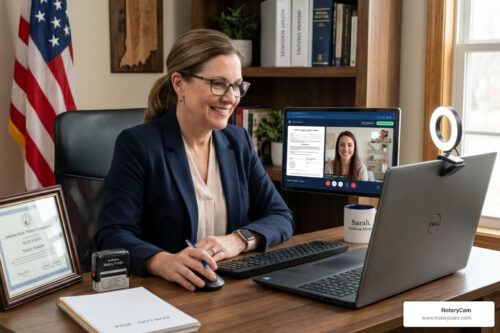
For many people, remote online notarization (RON) has become one of the fastest and most convenient ways to get documents notarized. Instead of driving to a bank, shipping store, or law office, online notarization allows eligible documents to be notarized remotely using a secure live video session from your phone, tablet, or computer.
Many people searching for an online notary or same-day notarization choose remote online notarization because it can eliminate travel time, reduce scheduling delays, and provide greater flexibility outside traditional business hours.
Platforms like NotaryCam specialize in remote online notarization services and connect users with commissioned online notaries for a wide range of eligible document types.
Why Many People Choose Online Notarization
Online notarization can offer several advantages over traditional in-person appointments, including:
- No travel required
- Convenient access from home or work
- Faster scheduling for urgent documents
- Helpful for same-day notarization needs
- Availability outside standard banking hours
- Easier coordination for remote or multi-state signers
- Secure digital copies that are easy to store and share
For busy professionals, travelers, seniors, remote workers, and individuals with mobility limitations, online notary services can often provide a more flexible alternative to traditional in-person notarization.
How Online Notarization Typically Works
While the exact process can vary by provider and state requirements, remote online notarization generally follows a few simple steps:
- Upload your document securely to the platform
- Verify your identity using a government-issued photo ID and security checks (KBA, third-party ID verification)
- Connect with a commissioned online notary through a live video session
- Electronically sign the document during the notarization session
- Download and store the completed notarized document digitally
Most users only need a laptop or computer with a webcam, audio capability, and a reliable internet connection to complete the process.
Common Documents That May Be Notarized Online
Depending on state laws and document eligibility, online notarization platforms may support documents such as:
- Powers of attorney
- Affidavits
- Real estate documents
- Loan paperwork
- Business agreements
- Vehicle title documents
- Personal declarations
- Estate planning documents
If you have a specific document type, checking with the platform beforehand can help confirm whether it qualifies for remote online notarization.
Security and Identity Verification
Most remote online notarization platforms use multi-factor identity verification measures designed to help protect the integrity of the notarization process. This may include government-issued ID verification, knowledge-based authentication questions, encrypted video sessions, and recorded audit trails.
Because remote online notarization laws vary by state, it’s important to verify whether your document and jurisdiction permit online notarization before proceeding.
Note: RON laws vary significantly from state to state. Some states have comprehensive frameworks supporting remote online notarization, while others may have restrictions or different requirements. Before using a RON platform, check with your state’s regulatory authorities and consult with an attorney familiar with notarization laws in your jurisdiction to help confirm compliance with current local legislation.
Need to Get a Document Notarized Quickly?
For people searching for a fast and convenient way to get documents notarized, remote online notarization can often eliminate the delays and scheduling challenges that come with traditional in-person appointments. Instead of driving to a bank or shipping store, eligible documents can often be notarized securely online from your home, office, or mobile device.
Platforms like NotaryCam provide access to commissioned online notaries through secure live video sessions, allowing many users to complete the notarization process in minutes rather than hours or days.
Whether you need same-day notarization, after-hours availability, or a more flexible alternative to visiting a physical location, online notary services can provide a practical solution for many common document types.
How to Choose the Right Option for Your Situation
With several options available, the right choice often comes down to a handful of practical factors.
If cost is the primary consideration, a bank or credit union tends to be the most affordable route for account holders, and many may offer the service at no charge. If speed or after-hours availability matters more, an online RON platform may be the most practical fit, since many operate outside of standard business hours. If the document is legally complex or involves significant stakes, a law office can provide an added layer of professional oversight. If you need the notary to come to you, a mobile notary is typically the natural fit.
For small business owners who regularly need documents notarized, it may be worth evaluating whether a RON platform could reduce the time and logistical overhead that often comes with repeated in-person appointments.
Regardless of which route you choose, a few basics tend to apply across the board: verify the notary’s credentials, confirm fees before your appointment, bring a valid government-issued photo ID, and hold off on signing until the notary is there to witness it.
Frequently Asked Questions
What should I bring to a notarization appointment?
You’ll generally need a valid, government-issued photo ID such as a driver’s license, state ID, or passport, along with your unsigned document. Notaries are typically required to witness your signature in person, so arriving with a pre-signed document may prevent the notarization from being completed. If your document requires witnesses, they’ll often need to be present and may need to show their own ID. Calling ahead to ask about any additional requirements for your specific document type can save you an extra trip.
How much does it typically cost to get something notarized?
Notary fees can vary by provider and by state, since many states set a maximum fee a notary may charge per signature. Banks and credit unions tend to be the most affordable option, often offering the service free or at a low cost to account holders. Retail locations like UPS Stores generally charge more per signature, and mobile notaries typically add a travel fee on top of the notarization charge. Online RON platforms often charge a flat fee per session. Confirming total costs before your appointment is always a good idea.
Can I get a document notarized if I can’t leave home?
In many situations, yes. A mobile notary can travel to your location, whether that’s your home, workplace, a hospital, or another address, typically for an additional travel fee. Remote online notarization (RON) may also be an option depending on your state, allowing you to complete the process via video session from any location with a reliable internet connection and a device with a webcam. Because RON availability and requirements can vary by state, it’s worth confirming your jurisdiction’s rules before getting started.
What types of documents can typically be notarized?
A wide range of documents may be eligible for notarization, including powers of attorney, affidavits, real estate deeds, loan documents, wills and trusts, vehicle titles, business contracts, adoption papers, and personal declarations. That said, not all notary providers can handle every document type. Some retail locations, for example, may have limitations on what they’re able to notarize. If you’re unsure whether your document qualifies, the organization or party requesting the notarization can often point you in the right direction. For complex legal documents, consulting an attorney is generally advisable.
How do I verify that a notary is properly commissioned?
In most states, notaries are commissioned by a state authority such as the Secretary of State’s office, and their credentials are often searchable through a public online registry. Your state’s official government website tends to be the most reliable resource for confirming a notary’s current commission status. When using a RON platform, looking for one that references compliance with your state’s specific RON requirements can offer additional reassurance. For high-stakes transactions, asking the notary directly about their commission status and expiration date is a reasonable step to take.
Conclusion
Getting something notarized doesn’t have to be a stressful or time-consuming experience. Between banks, retail notary locations, law offices, mobile services, and online platforms, the options available today can accommodate a wide range of needs and schedules.
For straightforward, time-sensitive documents, a bank or online RON platform may offer the most practical path. For documents that carry real legal weight, pairing notarization with professional legal guidance from an attorney tends to be the more careful approach. And for situations where you need flexibility around location or timing, mobile notaries and RON platforms can often accommodate what traditional in-person options may not.
Whatever option you choose, the fundamentals tend to remain the same: confirm the notary’s credentials, understand the fees upfront, bring valid identification, and hold off on signing until the notary is there to witness it. Those simple steps can go a long way toward protecting the integrity of your document.
If you’re considering online notarization specifically, taking a few minutes to review your state’s current RON laws before you begin is generally a smart move, since requirements around technology, identity verification, and document acceptance can vary considerably from state to state.



 Your Privacy Choices