



Remote online notarization has become increasingly popular in recent years, especially since the COVID-19 pandemic. But, what states allow remote notary services? This is a question many people are asking as they navigate legal and financial transactions in our increasingly digital world. The landscape of remote notarization is constantly evolving, with more states adopting laws to enable this convenient and efficient process.
We’ve closely followed the developments in remote notarization. The shift towards digital solutions in the notary industry has been nothing short of revolutionary. Gone are the days when you had to physically visit a notary public to get documents authenticated. Now, in many states, you can complete this process from the comfort of your own home or office using an online notary service.
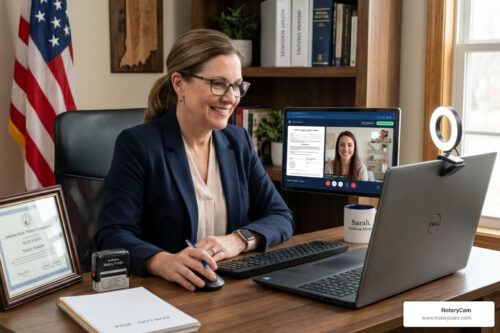
But, before we dive into the specifics of what states allow remote notary services, it’s important to understand what remote online notarization (RON) actually entails. RON allows a notary public to witness document signings using audio-visual technology, rather than being physically present. This means you can connect with a notary via video call, show your ID, sign documents electronically, and have them notarized – all without leaving your chair.
The convenience of RON can’t be overstated. It’s not just about saving time and avoiding traffic. For people with mobility issues, those living in remote areas, or anyone with a busy schedule, remote notarization can be a game-changer. But, the benefits extend beyond convenience. RON can also enhance security and reduce fraud through advanced identity verification methods.
States That Allow Remote Online Notarization
As of 2024, the majority of U.S. states have enacted laws allowing for some form of remote online notarization. However, it’s crucial to note that the specific requirements and regulations can vary significantly from state to state. Let’s break down the current landscape:
States with Permanent RON Laws
The following states have passed permanent laws allowing remote online notarization:
| States | Year Enacted |
|---|---|
| Alaska, Arizona, Arkansas, Colorado, Florida, Idaho, Indiana, Iowa, Kentucky, Louisiana, Maryland, Michigan, Minnesota, Montana, Nebraska, Nevada, North Dakota, Ohio, Oklahoma, South Dakota, Tennessee, Texas, Utah, Vermont, Virginia, Washington, Wisconsin, Wyoming | Various (2011-2021) |
| California, Connecticut, Delaware, District of Columbia, Hawaii, Illinois, Kansas, Maine, Massachusetts, New Hampshire, New Jersey, New Mexico, New York, North Carolina, Oregon, Pennsylvania, Rhode Island, West Virginia | 2021-2024 |
It’s worth noting that Virginia was the pioneer in this field, enacting its RON law in 2011. Since then, other states have followed suit, with the pace of adoption accelerating in recent years. Many states have adopted new notary laws surrounding this.
States with Temporary RON Authorization
Some states have implemented temporary measures to allow remote notarization, often in response to the COVID-19 pandemic. These include:
- Alabama.
- Georgia.
- Mississippi.
It’s important to check the current status of these temporary authorizations, as they may have expiration dates or be subject to renewal.
The Push for Nationwide RON Legislation
While the majority of states now allow remote notarization, there’s a growing push for federal legislation to create a uniform standard across the country. The SECURE Notarization Act has been introduced in Congress with bipartisan support. If passed, this legislation would authorize notaries nationwide to perform electronic and remote notarizations.
The potential benefits of a nationwide standard are significant. It would eliminate confusion for businesses and individuals operating across state lines, ensure consistent security measures, and potentially accelerate the adoption of RON technology. This would help people remotely notarize documents much easier.
How Remote Online Notarization Works
If you’re new to the concept of remote notarization, you might be wondering how it actually works in practice. Here’s a step-by-step breakdown:
- Schedule an appointment with a remote notary through an approved platform.
- Upload the document(s) you need notarized to the platform.
- Join a video call with the notary at the scheduled time.
- Verify your identity using methods such as knowledge-based authentication or credential analysis.
- Sign the document electronically while the notary watches via video.
- The notary then adds their electronic signature and seal to the document.
This process is designed to be just as secure as in-person notarization, if not more so. Many RON platforms use advanced technologies like blockchain to ensure the integrity of notarized documents. This makes it a secure way to notarize documents online.
Benefits and Challenges of Remote Notarization
The rise of remote notarization brings both opportunities and challenges. Let’s explore some of these:
Benefits
- Convenience: Complete notarizations from anywhere, at any time.
- Efficiency: Reduce travel time and costs associated with in-person notarizations.
- Accessibility: Make notary services available to those with mobility issues or in remote areas.
- Enhanced security: Use advanced identity verification methods to reduce fraud.
Challenges
- Technology barriers: Some individuals may struggle with the required technology.
- Legal acceptance: Not all jurisdictions may accept remotely notarized documents.
- Privacy concerns: Some worry about the security of personal information shared online.
- Training and certification: Notaries need additional training to perform RON services.
Despite these challenges, the trend towards remote notarization seems unstoppable. As more states adopt RON laws and technology continues to improve, we can expect to see even wider acceptance and use of this service. For example, many are hoping to see South Dakota notary laws change in the near future.
The Future of Remote Notarization
As we look to the future, it’s clear that remote notarization is here to stay. The convenience and efficiency it offers are simply too valuable to ignore. But what might the future hold for this technology?
One exciting possibility is the integration of artificial intelligence and machine learning into the notarization process. These technologies could potentially enhance identity verification, detect fraud more effectively, and even assist notaries in reviewing complex documents. It would be interesting to see how West Virginia notary laws would adapt to this new technology.
Another trend to watch is the increasing use of blockchain technology in notarization. Blockchain could provide an immutable record of notarized documents, adding an extra layer of security and authenticity. North Dakota notary laws are already looking into how this can be incorporated into notarizations.
We may also see a shift towards more specialized remote notary services. For example, notaries with expertise in specific areas of law or business could offer their services nationwide, thanks to RON technology. This would allow people in Rhode Island to connect with a notary in, for example, California.
FAQs about what states allow remote notary
Can a Florida remote notary notarize in another state?
Generally, a Florida remote notary can only notarize documents for signers who are physically located in Florida at the time of notarization. However, some states have reciprocity agreements that may allow out-of-state notarizations. It’s always best to check the specific laws of both states involved.
Is online notary legal in the US?
Yes, online notary is legal in most U.S. states. As of 2024, 47 states and the District of Columbia have enacted laws allowing for some form of remote online notarization. However, the specific requirements and regulations can vary by state.
How many states have Ron?
As of 2024, 47 states and the District of Columbia have enacted laws allowing for remote online notarization (RON). The specific implementation and requirements may vary from state to state.
Does CA allow remote online notarization?
Yes, California now allows remote online notarization. Governor Newsom signed SB 696 into law in 2023, which will take effect in 2024. This law permits the use of RON in California, although it’s important to note that there may be specific requirements and regulations to follow.
Conclusion
The landscape of what states allow remote notary services is constantly evolving, with more jurisdictions recognizing the value and necessity of this technology. As we’ve seen, the majority of U.S. states now have laws in place allowing for remote online notarization, with only a few holdouts remaining. The states that do not allow it yet likely have it in the works.
The push towards nationwide standardization through federal legislation could further simplify and streamline the process of remote notarization. This would not only benefit individuals and businesses by providing greater convenience and efficiency, but it could also enhance security and reduce fraud in notarial acts.
As technology continues to advance and more people become comfortable with digital solutions, we can expect remote notarization to become increasingly commonplace. Whether you’re buying a house, starting a business, or executing a will, chances are that in the near future, you’ll have the option to do it with a remote notary, regardless of what state you’re in. You may even be able to find notary training courses online.
The key takeaway is this: if you’re wondering what states allow remote notary services, the answer is likely to be “yours” – and if not now, then soon. As we move further into the digital age, remote notarization is set to become not just an option, but the new standard in document authentication.



 Your Privacy Choices