



Disclaimer: This blog post is for informational purposes only and does not constitute legal advice. Please consult an attorney for guidance on specific laws regarding Remote Online Notarization (RON), digital signatures, and related legal matters. As laws concerning RON and notarization are subject to frequent changes, it is advisable to verify current regulations with your local government.
Jurat at a Glance
Definition: A notarial act requiring an oath.
Used For: Affidavits, sworn statements, court documents.
Requires Oath: Yes.
Requires Notary: Yes.
Can Be Done Online: In many states through RON.
Purpose: Verify identity and sworn truthfulness.
If you have ever signed a legal document in front of a notary, there is a good chance a jurat was involved. But unless you work in law or frequently deal with official paperwork, the term itself may not mean much. That is entirely normal. Most people encounter jurats without ever knowing what they are called.
This guide breaks down what a jurat is, when you are likely to need one, how it differs from other types of notarization, and what the process actually looks like, including the option to complete one remotely through Remote Online Notarization (RON).
What Is a Jurat?
A jurat is a type of notarial act in which a person swears or affirms, under oath, that the contents of a document are true to the best of their knowledge. The notary public witnesses this oath, verifies the signer’s identity, and then completes a certificate confirming that the act took place.
In plain terms: with a jurat, you are not just signing a document. You are swearing that the information in it is true to the best of your knowledge. That distinction can matter significantly in legal contexts.
The word itself may sound technical, but the concept is straightforward. When you sign an affidavit or sworn statement, the jurat creates a record that the oath occurred. It creates a record that you appeared before an authorized official, established who you are, and took a formal oath.
Who Can Perform a Jurat?
A jurat must be performed by an authorized notarial officer, such as a commissioned notary public or another individual legally authorized to administer oaths and affirmations within the applicable jurisdiction. During the process, the notarial officer verifies the signer’s identity, witnesses the signature, administers an oath or affirmation, and completes the required notarial certificate.
Because notarization requirements can vary, the authority to perform a jurat and the procedures that must be followed may differ depending on where the notarization takes place. If you are unsure whether a particular individual is authorized to perform a jurat, it may be helpful to consult the relevant regulatory authority or seek legal guidance.
What Happens If You Lie Under a Jurat?
When completing a jurat, the signer takes an oath or affirmation stating that the contents of the document are true to the best of their knowledge. This oath is a formal declaration made before an authorized notarial officer.
Providing information that is knowingly false in a sworn statement may have serious consequences depending on the circumstances, the nature of the document, and applicable laws. In some situations, false statements made under oath may become relevant in legal proceedings, investigations, or other official matters.
A jurat itself does not determine whether information is true or false. Rather, it creates an official record that the signer appeared before an authorized official, verified their identity, and took an oath or affirmation regarding the contents of the document.
Disclaimer: This information is provided for general educational purposes only and does not constitute legal advice. For guidance regarding a specific document or legal matter, consult a qualified attorney.
When Is a Jurat Required?
Jurats tend to come up whenever a document requires more than just proof of identity and a witnessed signature. They are commonly associated with:
- Affidavits (sworn written statements used in legal proceedings)
- Depositions
- Sworn financial statements
- Certain insurance claims
- Court filings that require a signer to attest to accuracy under oath
The key indicator is whether the document asks you to swear that its contents are true, not simply that you signed it willingly. If someone hands you a document and tells you that you will need to take an oath, you are almost certainly looking at a jurat.
When in doubt about which type of notarization a document requires, it is worth checking with the requesting party or consulting an attorney. Notaries can explain the different types of notarial acts, but they cannot advise you on which one applies to your specific situation.
Common Documents That Require a Jurat
Jurats often appear in situations where the accuracy of the information in a document matters as much as the signature itself. In these cases, the signer is not only confirming their identity but also swearing or affirming that the contents of the document are true to the best of their knowledge.
Many organizations use jurats when a document may later be reviewed in a legal, financial, or regulatory setting. The oath component can add a layer of accountability that a simple notarized signature may not provide.
Some common examples where businesses may encounter jurats include:
- Affidavits and sworn declarations used in legal proceedings
- Insurance claim statements where the claimant must attest to the accuracy of reported losses
- Financial disclosures or sworn financial statements required during litigation or lending reviews
- Real estate affidavits, such as occupancy affidavits or identity affidavits used during property transactions
- Corporate compliance statements or internal investigations where individuals are asked to certify the accuracy of information
In many of these situations, the document may be reviewed by courts, regulators, lenders, or insurance professionals. Because the signer takes a sworn oath, knowingly providing false information may carry legal consequences depending on the circumstances and jurisdiction.
Like other types of notarization, jurats may sometimes be completed through Remote Online Notarization (RON) when permitted by state law. This allows the signer and notary to connect through a secure audio-visual session rather than meeting in person. To participate in a RON session, individuals typically need a device with webcam and audio capabilities along with a reliable internet connection.
Note: Notarization and RON laws vary significantly from state to state. Some jurisdictions may allow jurats to be performed remotely, while others may have additional requirements or restrictions. Before completing a jurat remotely, it is advisable to confirm the rules in the relevant state and consult an attorney if the document is intended for legal or official use.
Jurat vs. Acknowledgment
People often confuse jurats with acknowledgments, and it is easy to see why. Both involve a notary public and result in an official certificate attached to your document. But they serve meaningfully different purposes.
An acknowledgment focuses on identity and voluntary intent. The notary verifies who you are and confirms that you signed the document willingly, without coercion. You may have already signed the document before you arrive at the notary, and that is generally acceptable for an acknowledgment.
A jurat goes further. The signer must sign in the notary’s presence and take a sworn oath or affirmation that the document’s contents are accurate. This added layer of accountability means that if the information turns out to be false, the signer may face legal consequences for providing false testimony under oath.
In short: an acknowledgment confirms who signed and that they did so voluntarily. A jurat confirms that the signer personally appeared before the notary, signed the document in the notary’s presence, and took an oath or affirmation that the contents are true to the best of their knowledge.
Note: Notarization laws vary significantly from state to state. The specific requirements for jurats, including required wording on certificates and acceptable forms of identification, may differ depending on where you are. Before relying on a notarized document in a legal or official context, check with your state’s regulatory authorities and consult with an attorney familiar with notarization laws in your jurisdiction to help ensure compliance with current local rules.
How the Jurat Process Works
If you have never gone through a jurat before, knowing what to expect can make the whole experience much less intimidating. Here is a general overview of how it typically works.
Step 1: Prepare Your Document
Unlike an acknowledgment, you generally should not sign the document before you arrive. With a jurat, the notary needs to witness your signature. Make sure the document is otherwise complete and that all required information is filled in before your appointment.
Step 2: Bring Valid Identification
The notary will need to verify your identity before proceeding. A government-issued photo ID, such as a driver’s license or passport, is typically required. Make sure the name on your ID matches the name on the document.
Step 3: Sign in the Notary’s Presence
You will sign the document while the notary watches. No one else can sign on your behalf, and you must be the person whose identity has been verified.
Step 4: Take the Oath or Affirmation
The notary will administer an oath or affirmation, asking you to swear or affirm that the contents of the document are true and accurate to the best of your knowledge. This is the step that distinguishes a jurat from other notarial acts.
Step 5: Notary Completes the Certificate
After witnessing your signature and administering the oath, the notary completes the jurat certificate. This typically includes the date, the notary’s signature and seal, and may include a record of the act in the notary’s official journal, depending on state requirements.
Can You Complete a Jurat Through Remote Online Notarization (RON)?
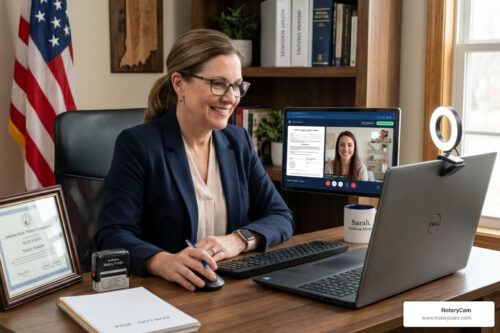
Yes, in many states you can. Remote Online Notarization (RON) allows you to complete a notarial act, including jurats, over a secure audio-visual connection with a commissioned online notary. Instead of traveling to a physical location, you connect with a notary through a platform like NotaryCam from wherever you happen to be.
The process generally mirrors an in-person jurat in many ways. You still need to verify your identity, sign the document during the session, and take a sworn oath or affirmation. The difference is that all of this happens through a live video call rather than across a desk.
To participate in a RON session, you will need a computer with a webcam and audio capabilities, along with a reliable internet connection. Most platforms walk you through the identity verification process, which may include answering knowledge-based questions and presenting a government-issued ID on camera.
RON can be a convenient option for people who have difficulty traveling, live in remote areas, or simply need to complete time-sensitive documents without scheduling an in-person appointment.
Note: RON laws vary significantly from state to state. Some states have established comprehensive frameworks supporting remote online notarization, while others may have restrictions or different requirements. Before scheduling a RON session for a jurat, check with your state’s regulatory authorities and consult with an attorney familiar with notarization and RON laws in your jurisdiction to help ensure the resulting document will be accepted for its intended purpose.
Do All States Allow Remote Jurats?
No. The availability of Remote Online Notarization (RON) and the types of notarial acts that may be performed remotely can vary significantly across jurisdictions. Some jurisdictions have established frameworks that permit certain jurats to be completed remotely through a secure audio-visual session with an authorized online notary, while others may impose additional requirements, limitations, or restrictions.
Even where Remote Online Notarization is available, acceptance of remotely notarized documents may depend on factors such as the type of document involved, the intended use of the document, and applicable laws or regulations.
Before scheduling a remote jurat, it is advisable to verify current requirements with the appropriate regulatory authorities and consult legal counsel if the document is intended for an important legal, financial, or official purpose.
Disclaimer: Laws governing Remote Online Notarization and jurats are subject to change. This information is provided for educational purposes only and should not be considered legal advice.
Why Jurats Matter
At their core, jurats play an important role in supporting the integrity of legal processes. When someone swears under oath that a document is accurate, and a notary public creates an official record of that oath, it becomes much harder to later claim ignorance or dispute what was attested to.
For individuals, this can be reassuring. It means that important documents, whether they are affidavits supporting a legal claim or sworn financial statements in a business matter, carry a layer of verification that helps establish their credibility.
Fraud prevention professionals note that the combination of identity verification and sworn oath makes jurats a meaningful deterrent against false statements in legal proceedings. While no single process can prevent all fraud, having a formal, witnessed, and recorded oath adds accountability that a simple signature does not.
Frequently Asked Questions About Jurats and Notarization
What is the difference between a jurat and a notary acknowledgment?
A jurat and a notary acknowledgment are both types of notarial acts, but they serve different purposes. An acknowledgment confirms that the signer appeared before the notary, proved their identity, and voluntarily signed the document. A jurat requires all of that plus a sworn oath or affirmation that the document’s contents are true. Because of this additional step, jurats are typically used for affidavits, depositions, and other documents where the accuracy of the information, not just the signature, is legally significant. If you are unsure which type of notarization a document requires, the requesting party or an attorney can help clarify.
Jurats are commonly used for affidavits, sworn declarations, and other documents where a signer must attest to the truthfulness of the information.
Can I sign the document before seeing the notary for a jurat?
Generally, no. One of the key requirements for a jurat is that the signer must sign in the notary’s presence. This is different from an acknowledgment, where you may have already signed the document before meeting with the notary. If you are preparing for a jurat appointment, it is best to bring the document unsigned and complete the signing during the session after the notary has verified your identity. Requirements can vary by state, so it is worth confirming the process with your notary ahead of time.
Is a jurat legally binding?
A properly executed jurat can add legal credibility to a document, though the specific enforceability of a document depends on many factors, including the nature of the document itself, the jurisdiction, and whether all procedural requirements were followed correctly. What a jurat does is create an official record that a signer appeared before an authorized notary, confirmed their identity, and swore under oath to the accuracy of the document’s contents. This may strengthen the document’s credibility in legal proceedings. For guidance on how a jurat may affect a specific document or situation, it is advisable to consult an attorney.
Can a jurat be completed online through Remote Online Notarization?
In many states, yes. Remote Online Notarization (RON) platforms allow signers to complete jurats over a live video connection with a commissioned online notary, rather than meeting in person. The process typically includes identity verification, live witnessing of the signature, and administration of the oath or affirmation, all conducted through a secure audio-visual session. To participate, you will need a device with a webcam and microphone and a stable internet connection. However, RON availability varies by state, and not all jurisdictions permit RON for every type of document. Checking with your state’s regulatory authority or an attorney before proceeding is a good idea.
What identification do I need to bring for a jurat?
Most notaries require a valid, government-issued photo ID, such as a driver’s license, state ID card, or passport. The name on your identification should match the name on the document being notarized. Some states may have specific rules about which forms of ID are acceptable, and online notarization platforms may have their own identity verification requirements in addition to reviewing your ID. If you are unsure what to bring, it is worth contacting the notary or RON platform in advance to confirm their specific requirements.
Conclusion
A jurat may not be a term most people use in everyday conversation, but understanding what it is and when it applies can save a lot of confusion when important documents are on the line. At its heart, a jurat is a commitment. You are not just signing a piece of paper, you are swearing, in front of an authorized witness, that what it says is accurate.
Whether you need a jurat for an affidavit, a sworn statement, or another legal matter, the process is generally straightforward once you know what to expect. Prepare your document, bring valid identification, sign in the notary’s presence, and take the oath. If an in-person visit is not convenient, Remote Online Notarization may offer a practical alternative, depending on your state’s rules and the type of document involved.
Because notarization laws can vary considerably from one state to another, it is always worth verifying requirements with your state’s authorities and consulting an attorney when the stakes are high. A properly executed jurat can be a meaningful piece of the legal puzzle, and getting it right from the start tends to be much easier than trying to fix it later.


 Your Privacy Choices