


Untitled design (14)

(800) 931-7423

Untitled design (17)

Every Signature Tells a Story

Independent Notary Software: How to Choose the Right RON Platform for Your Practice

Whether you are a working notary evaluating RON for the first time or an experienced remote notary looking to upgrade your platform, choosing the right independent notary software can be one of the more important business decisions for your practice. The software you use can shape much of your client experience, from how signers verify their identity to how you maintain your records and demonstrate compliance.

This guide walks through what RON software does, what to look for when comparing platforms, and the questions worth asking before you commit. Because RON laws vary significantly from state to state, it is also worth understanding how state-specific requirements should factor into your evaluation.


Quick Answer: What is Independent Notary Software

What it is: Purpose-built software that lets a commissioned notary perform Remote Online Notarization (RON), where state law permits it, through a live secure two-way audio video session.

Identity verification: Typically credential analysis, using a third-party vendor to authenticate the signer’s government-issued photo ID, followed by knowledge-based authentication (KBA) using questions generated from public records.

Record retention: Varies by state and platform; some states set multi-year minimums for session recordings and journal entries, so retention terms are worth comparing directly.

Who it’s for: Notaries evaluating RON for the first time, and notaries already performing RON who are comparing platforms.

Note: RON and notarization laws vary by state and change over time; confirm current requirements with your state’s notary authority before proceeding.


What Independent Notary Software Actually Does

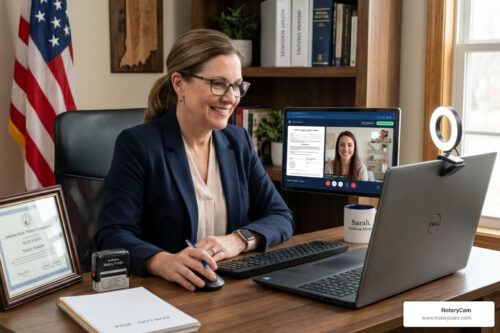
Independent notary software built for RON is, at its core, a purpose-built platform that can support legally recognized notarizations online, subject to applicable state law. Rather than meeting a client in person, you connect through a live secure two-way audio video session, verify their identity through credential analysis and knowledge-based authentication, witness their electronic signature, and apply your digital seal, all within a single platform designed to support applicable RON requirements.

For independent notaries, that means the software is effectively your office. It handles the infrastructure that in-person notarizations require you to manage manually: identity checks, document handling, journaling, and record retention. A well-designed platform takes those obligations off your plate so you can focus on the notarization itself and the professional relationship with your client.

It is worth distinguishing RON software from general notary management tools. Some platforms focus primarily on scheduling, invoicing, or document storage. RON-specific software includes those workflow features but adds the audio-visual technology, identity verification protocols, and digital journaling that remote notarizations legally require. If you are looking to perform RON, you should look for a platform built for it, not adapted from something adjacent.

Who This Software Is For

Notaries New to RON

If you are a commissioned notary who has not yet adopted RON, independent notary software is typically what makes the transition possible. Most states that permit RON require notaries to use a state-approved or state-compliant technology platform. Attempting to conduct remote notarizations without one is generally not a viable path.

For notaries exploring RON for the first time, the practical questions tend to be: Does my state permit RON, and if so, does it require me to register or get additional authorization? What technology do I need on my end? And how does the platform guide me through a session so that I am meeting my state’s requirements?

Note: RON laws vary significantly from state to state. Some states have comprehensive RON frameworks in place, while others may have limited authorization, pending legislation, or specific document exclusions. Before investing in any software, confirm whether your state permits RON for notaries and what platform or registration requirements apply. Your state’s Secretary of State office or notary regulatory authority is typically the right starting point.

Notaries Already Performing RON

If you are already conducting remote notarizations but are evaluating a different platform, your questions are likely more specific. You may be looking at record retention practices, session reliability, identity verification rigor, pricing structure, or support quality. You probably have a clearer sense of what friction points exist in your current workflow and what a better platform would need to address.

Either way, the evaluation criteria below apply. The difference is mostly in which factors carry the most weight for where you are in your practice.

What to Look For in Independent Notary Software

State Compliance and Approval Status

This tends to be the most important starting point. The platform you use must meet the technical and legal standards your state requires for RON. Some states maintain approved platform lists; others specify technical standards that platforms must meet without prescribing specific vendors. Before evaluating any other feature, confirm that the platform you are considering is compliant with your state’s current RON rules.

Keep in mind that compliance requirements can change. A platform that met your state’s standards when you signed up may need updates as legislation evolves. Asking a prospective vendor how they handle regulatory changes, and whether they actively monitor state-level RON legislation, is a reasonable part of the evaluation conversation.

Identity Verification Protocols

Identity verification is often considered the backbone of a RON session, and the strength of the platform’s verification process has direct implications for the integrity of your notarizations. Look for platforms that lead with credential analysis, which uses a third-party vendor to authenticate the signer’s government-issued photo ID, followed by knowledge-based authentication (KBA), using questions generated from public records. That sequence, an ID review before the knowledge questions, is worth confirming with any vendor you evaluate.

Some platforms offer additional verification layers depending on transaction type or state requirements. Understanding exactly what the platform does to verify identity, and how it documents that process, matters both for compliance and for your own professional protection if a notarization is ever challenged.

Audio-Visual Session Quality and Reliability

The live secure two-way audio video session is where the notarization happens, which means session stability and quality are operational priorities, not just nice-to-haves. A dropped connection at the wrong moment can disrupt a transaction, frustrate a client, and in some cases require the session to restart from the beginning.

When evaluating platforms, look for information about uptime history, technical support availability during session hours, and how the platform handles connectivity issues mid-session. Platforms that offer dedicated support channels for notaries, not just clients, tend to handle technical problems more smoothly when they arise. To use any RON platform effectively, you will also need a computer, laptop or tablet with webcam and audio capabilities, plus a reliable internet connection.

Electronic Signature and Digital Seal Tools

RON sessions involve both the signer’s electronic signature and the notary’s digital signature and seal. These are distinct in both technical and legal terms, and the platform needs to handle both correctly. The notary’s digital seal in particular carries legal weight, and it should be applied in a way that helps make the document tamper-evident after the session concludes.

Ask vendors how their electronic signature tools are implemented, whether they align with the requirements of the federal ESIGN Act and their state’s adoption of the Uniform Electronic Transactions Act (UETA), and how the notary’s digital seal is generated and stored. A platform that can walk you through this clearly is generally one that has thought carefully about compliance.

Journal and Record Retention

Most states require notaries to maintain a journal of notarial acts, and RON platforms typically handle this digitally. What varies is how long records are retained and how accessible they are if you need to retrieve a session or document for audit or dispute purposes.

Longer retention windows are worth looking for, since some states require lengthy record-keeping periods and a longer retention period can provide a stronger foundation if questions arise years after a transaction. NotaryCam, for example, offers ten-year record retention as a standard feature of its independent notary software, which aligns with more conservative state requirements and can provide a meaningful buffer for notaries handling real estate and legal documents that may be referenced long after closing.

Pricing Structure and Contract Terms

Independent notary software pricing models vary considerably. Some platforms charge per transaction, others use monthly subscription fees, and some combine both. For notaries with variable transaction volume, a model without monthly minimums can offer more flexibility, while high-volume notaries may benefit from more predictable flat-rate pricing.

Contract length is also worth examining. Shorter initial commitments give you the ability to evaluate a platform in a real working environment before committing for the long term. Ask whether there are limits on transaction volume, what happens if you need to add additional users or attendees to a session, and what the process looks like for upgrading or changing your plan as your practice grows.

Security Certifications

SOC 2 certification indicates that a platform has undergone independent third-party auditing of its security controls, including how it handles data storage, access management, and incident response. For notaries handling sensitive personal and financial documents, working with a SOC 2 certified provider can be an important part of demonstrating professional due diligence.

MISMO RON certification is another relevant benchmark, particularly for notaries who work with mortgage and real estate transactions. MISMO is a standards body for the mortgage industry, and its RON certification indicates that a platform has been evaluated against industry-developed standards for remote notarization technology. Some lenders and title companies may require their notary vendors to use MISMO-certified platforms, so this certification can also affect the types of work available to you.

Training and Onboarding Support

How a platform supports you in getting started matters, especially if you are new to RON or transitioning from a different system. Look for platforms that offer access to training materials, documentation, and responsive support, ideally without requiring you to pay extra or wait extended periods for help.

Broad access to training materials is a feature worth asking about specifically, since RON workflows have enough nuance that being able to revisit guidance as your practice evolves is genuinely useful. Platforms that offer dedicated support channels, such as email support with reasonable response times or access to tutorials organized by topic, tend to serve independent notaries better than those that rely primarily on community forums or AI-only help tools.

Client Experience

The platform you choose shapes your clients’ experience just as much as it shapes your workflow. If signers have difficulty joining a session, uploading documents, or understanding the identity verification steps, that friction reflects on you professionally even if the technical issue is on the platform’s end.

When evaluating software, think through the process from your client’s perspective. How do they receive the invitation to join a session? How many steps does identity verification require on their end, and how clearly is each step explained? What happens if they encounter a technical problem? A platform that makes the signing experience straightforward for clients, including those who are not particularly tech-savvy, tends to produce better outcomes and fewer last-minute support issues.

Questions to Ask Before Committing to a Platform

Once you have narrowed your options, a few direct questions to prospective vendors can help surface differences that feature lists alone do not always reveal.

  • Is your platform currently approved or compliant in my state, and how do you monitor and respond to regulatory changes?
  • What identity verification methods do you use, and how is that process documented in the session record?
  • What is your average session uptime, and what support is available if a session experiences technical issues?
  • How long are session recordings and journal entries retained, and how do I access them if needed?
  • What are the contract terms, and are there limits on transaction volume or session attendees?
  • Are you SOC 2 certified and MISMO RON certified?
  • What does onboarding look like, and what ongoing training or support resources are available?

A vendor that can answer these questions clearly and specifically, without deflecting or speaking only in generalities, is generally one that has built its platform with working notaries in mind.

How NotaryCam’s Independent Notary Software Fits Into This Evaluation

NotaryCam offers independent notary software designed for commissioned notaries looking to perform RON. Its platform includes credential analysis through a third-party vendor, knowledge-based authentication (KBA) using questions generated from public records, live secure two-way audio video sessions with recording, digital notary seals, and ten-year journal retention. It has undergone SOC 2 review and is MISMO RON certified, which can make it a relevant option for notaries who work with real estate and mortgage clients where those certifications may be expected.

Contract terms, pricing, and support offerings can change, so confirming current details directly with NotaryCam is worth doing as part of your evaluation rather than relying on any single summary, including this one. As with any platform, confirming that NotaryCam meets the specific requirements of your state before signing up is an important step, since platform eligibility can vary by jurisdiction.

When Remote Online Notarization May Not Be Appropriate

Remote Online Notarization can be a flexible and efficient option in many situations, but it is not always the right fit for every transaction. Depending on the document type, the parties involved, and the laws in your state, there may be scenarios where an in-person notarization is still required or preferred.

Certain document categories may have additional requirements that limit or affect the use of RON. Wills, trusts, and some estate planning documents, for example, may be subject to stricter witnessing or notarization standards in certain states. Even where RON is permitted, additional formalities could apply that are not always supported through a remote session.

In real estate and lending transactions, lender or title company requirements can also play a role. Some organizations may require the use of specific platforms, certifications, or in-person notarization for particular documents within a closing package. These requirements can vary by transaction type and jurisdiction, so it is worth confirming expectations upfront.

There are also practical considerations. If a signer has difficulty using technology, lacks a computer, laptop or tablet with webcam and audio capabilities, or does not have a reliable internet connection, completing a remote session may not be feasible. In these cases, an in-person notarization can often provide a smoother experience.

Because requirements can vary by state and transaction type, it is important to confirm whether RON is appropriate for your specific situation before proceeding. Consulting your state’s notary authority, as well as an attorney familiar with local notarization laws, can help clarify whether a remote or in-person approach makes the most sense.

Frequently Asked Questions

Do I need special authorization from my state before I can use RON software?

In many states, yes. While some states allow any commissioned notary to perform RON using a compliant platform, others require notaries to complete an additional registration process, pass a course or exam, or receive specific authorization before conducting remote notarizations. Requirements vary considerably, so checking with your state’s notary regulatory authority, typically the Secretary of State’s office, before purchasing any software is an important first step. Purchasing a platform before confirming your eligibility could mean paying for software you cannot yet legally use in your state.

What equipment do I need to run RON sessions as an independent notary?

At a minimum, you will need a computer, laptop or tablet with webcam and audio capabilities, plus a stable, reliable internet connection. Many notaries find that a dedicated external webcam produces better video quality than a built-in laptop camera, which can matter when a notary needs to clearly observe a signer’s identification document during a session. You will also need a digital certificate and an electronic seal issued in accordance with your state’s requirements, which your RON platform can typically help you obtain or integrate. Your clients will need similar technology on their end: a computer, laptop or tablet with camera and audio capabilities, plus a reliable internet connection.

What is the difference between SOC 2 certification and MISMO RON certification, and do I need both?

SOC 2 certification addresses a platform’s security practices broadly, covering how it stores data, manages access, and responds to incidents. MISMO RON certification is specific to the mortgage and real estate industry and evaluates whether a platform meets that sector’s standards for remote online notarization technology. Whether you need both depends largely on the type of work you do. Notaries who handle real estate closings and mortgage documents are more likely to encounter lenders or title companies that require MISMO certification from their platform vendors, while SOC 2 alone may be sufficient for general notarizations outside of real estate. Confirming the certification requirements of your primary clients or referring partners can help clarify which matters most for your practice.

Can I switch platforms if I am not satisfied after signing up?

That depends on the terms of your contract. Some platforms lock notaries into longer commitments with early termination fees, while others offer shorter initial terms that give you more flexibility to evaluate before committing long-term. Reading the contract carefully before signing, particularly around term length, cancellation terms, and data portability, is advisable. Asking specifically how you would export your journal records and session data if you chose to move to a different platform is also worth doing upfront, since access to your own records is both a professional and potentially a legal matter.

How do I know if a RON platform will work for the types of documents my clients bring?

Most RON platforms can handle a broad range of document types, but some document categories may have state-specific restrictions that the platform cannot override. Wills, trusts, and certain estate planning documents, for example, may require in-person notarization in some states even where RON is otherwise permitted. Real estate documents may be subject to specific lender or title company requirements around platform certification. When you evaluate a platform, asking the vendor to walk you through which document types they support and which may have limitations in your state is a practical part of the process. Consulting with an attorney familiar with notarization law in your jurisdiction can also help clarify what your specific practice will and will not be able to handle remotely.

Choosing Software That Supports the Practice You Are Building

Independent notary software is not a commodity purchase. The platform you choose affects how you work, how your clients experience your services, and how well positioned you are to meet compliance obligations as RON laws continue to evolve. Taking the time to evaluate platforms against the criteria that matter most for your specific practice, your state’s requirements, your typical document types, and your volume expectations, tends to produce better long-term outcomes than choosing based on price alone.

For notaries new to RON, the right software can make the transition from traditional notarization significantly more manageable by handling the technical and compliance infrastructure that would otherwise require you to build from scratch. For notaries already performing RON, a platform upgrade can address friction points that compound over time, whether that is session reliability, record access, or the certifications your clients’ lenders or title companies expect.

Whatever platform you ultimately choose, verifying that it meets your state’s current requirements and suits the document types you handle most frequently is the right place to start. If you have questions about whether RON is permitted in your state or what authorization you may need to begin, your state’s notary regulatory authority and a qualified attorney are the most reliable sources for current guidance.

Disclaimer: This blog post is for informational purposes only and does not constitute legal advice. Please consult an attorney for guidance on specific laws regarding Remote Online Notarization (RON), digital signatures, and related legal matters. As laws concerning RON and notarization are subject to frequent changes, it is advisable to verify current regulations with your local government.