



Disclaimer: This blog post is for informational purposes only and does not constitute legal advice. Please consult an attorney for guidance on specific laws regarding Remote Online Notarization (RON), digital signatures, and related legal matters. As laws concerning RON and notarization are subject to frequent changes, it is advisable to verify current regulations with your local government.
Notarized documents play a more significant role in everyday life than many people realize. Whether you are closing on a home, granting someone power of attorney, or finalizing a business agreement, notarization often serves as an important layer of protection for everyone involved.
Understanding what notarization actually means, and why it matters, can help you approach the process with confidence rather than frustration.
What Is a Notary Public and What Do They Do?
A notary public is a state-appointed official who serves as an impartial witness to the signing of important documents and the administration of oaths. Their primary role is to help deter fraud and support the authenticity of signatures on legal papers.
The core duty of a notary is to verify the identity of the person signing a document, typically by examining a valid, government-issued photo ID such as a driver’s license or passport. Beyond identity verification, a notary also confirms that the signer appears to understand the document they are signing and is doing so voluntarily, without intimidation or coercion.
It is worth noting that notaries are not authorized to provide legal advice unless they are also licensed attorneys. Their role is strictly that of an official, impartial witness. If you have questions about the content of a document you are being asked to sign, consulting an attorney before your notary appointment is generally the better path.
Types of Notarial Acts
Notaries can perform several types of notarial acts, each serving a distinct purpose. The most common include:
- Acknowledgments: The signer appears before the notary and confirms that they signed the document voluntarily and understand its contents.
- Jurats: The signer swears or affirms that the contents of the document are true, often done under penalty of perjury.
- Copy Certifications: The notary confirms that a copy of an original document is a complete and accurate reproduction.
The type of notarial act required for a given document is usually specified by the party or institution requesting it. If you are unsure which type applies to your situation, the organization requesting notarization can typically clarify, though the notary may also be able to explain the differences.
State Requirements for Notaries
Notary laws and requirements vary from state to state. Each state sets its own rules covering eligibility criteria, education and testing requirements, commission terms, and the fees notaries may charge. Because of this variation, what is standard practice in one state may differ from requirements in another. Checking with your state’s Secretary of State office or a qualified attorney can help clarify what applies in your jurisdiction.
Common Documents That May Require Notarization
A wide range of documents may require notarization depending on the transaction and jurisdiction. Here are some of the most common categories.
Legal Documents
Many legal documents may need to be notarized to be considered valid and enforceable. These often include wills and trusts, powers of attorney, affidavits, deeds and property transfers, and various contracts and agreements. Notarization in these contexts helps establish that the person signing the document is who they claim to be and that they are signing of their own free will, which can be important if the document is ever scrutinized or contested.
Financial Documents
Certain financial transactions also commonly involve notarized documents. Loan agreements, vehicle titles, bank documents, and mortgage paperwork are frequent examples. For lenders and financial institutions, the notary’s role in verifying signer identity and apparent willingness to sign can help reduce the risk of fraudulent transactions.
Personal Documents
Personal documents may also require notarization in certain circumstances. These can include marriage licenses, custody agreements, guardianship papers, medical documents, and passport applications. Because these documents often involve sensitive personal matters, the added verification a notary provides can carry meaningful weight.
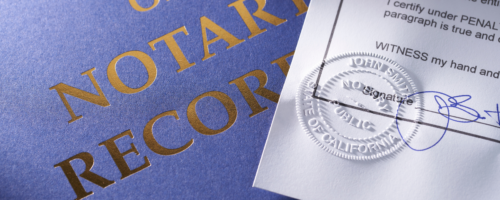
When a document requires notarization, the notary typically attaches a notarial certificate stating the date of notarization and the type of notarial act performed. They will also affix their official seal and signature. In some cases, an original document may need to be notarized rather than a copy, which is common for legal filings or certain financial transactions.
How to Get a Document Notarized
The process of getting a document notarized is generally more straightforward than people expect. Here is an overview of what to anticipate.
Finding a Notary Public
There are several options for locating a notary public, depending on your needs and location. Many banks offer notary services to their customers, often at no charge. Shipping and postal service locations frequently have notaries on staff as well. Mobile notaries, who travel to a location of your choosing, are another option and can often be found through an online search. Local government offices such as a county clerk or recorder’s office may also provide notary services.
For situations where in-person visits are not practical, remote online notarization (RON) may be an option depending on your state’s laws. With RON, a signer connects with a notary via a secure audio-video platform and completes the notarization process entirely online.
Note: RON laws vary significantly from state to state. Some states have comprehensive frameworks supporting remote notarization, while others may have restrictions or different requirements. Before using RON, check with your state’s regulatory authorities and consult with an attorney familiar with notarization laws in your jurisdiction to help confirm compliance with current local legislation.
To use RON services, participants need a computer with a webcam and audio capabilities, plus a reliable internet connection.
Preparing for Your Notary Appointment
A little preparation can make your notary appointment go smoothly. Before you go, make sure you have the unsigned document that needs notarizing, a valid government-issued photo ID, any other required signers present, and payment for notary fees if applicable. One important detail: do not sign the document before your appointment. The signing typically needs to happen in the notary’s presence.
The Notarization Process
Once you arrive at your appointment, the process is generally brief. You will present your ID to the notary for verification, sign the document in their presence, and verbally confirm that you understand the document and are signing voluntarily. The notary will then complete the notarial certificate and affix their official seal. In most cases, the entire process takes just a few minutes when all required documents and identification are in order.
The Role of Notarization in Preventing Fraud
One of the most important functions of notarization is fraud prevention. When a document is notarized, the notary confirms that the signature is genuine and was made in their presence. This can deter forgery and provides a verifiable record that the document was properly executed.
Verifying Signer Identity
Identity verification is a cornerstone of the notarization process. Notaries examine government-issued photo ID and confirm that it is current, has a legible photo, and appears consistent with the signer’s appearance. In cases where the signer is unknown to the notary, some states allow a credible identifying witness to vouch for the signer’s identity under oath. Requirements around acceptable identification can vary by state, so checking your state’s specific rules ahead of time is advisable.
Supporting Document Authenticity
Beyond identity verification, notarization can support the overall authenticity of a document. By witnessing the signing process and confirming the signer’s apparent willingness and understanding, the notary helps create a record that the document was properly executed. This can be particularly important for legal documents, contracts, and other papers that may later be used as evidence or referenced in legal proceedings.
Fraud prevention experts recommend notarization as a meaningful safeguard for significant transactions, particularly in an environment where document fraud and identity-related risks have become more common concerns.
Remote Online Notarization: A Modern Option
Remote online notarization, commonly referred to as RON, has expanded the ways people can access notary services. With RON, document signers can connect with a commissioned notary via a secure audio-video platform, complete identity verification digitally, and sign documents electronically, all without needing to be in the same physical location as the notary.
The typical RON process works as follows: the signer connects with a notary through a secure video platform, completes identity verification using methods such as knowledge-based authentication and credential analysis of a government-issued ID, signs the document electronically while the notary observes via webcam, and the notary then applies their electronic signature and digital seal. The session is generally recorded and stored, creating a documented record of the notarization.
Platforms like NotaryCam specialize in RON services and can be a useful resource for individuals and organizations looking to understand their options.
Benefits of Remote Online Notarization
For many people, RON may offer a more convenient alternative to traditional in-person notarization. Individuals in rural areas, those with mobility limitations, or anyone with scheduling constraints may find the flexibility of remote notarization particularly useful. For organizations handling high volumes of notarized documents, RON can also support more efficient workflows.
That said, RON is not uniformly available or accepted everywhere. State laws governing RON vary considerably, and not all document types or transactions may be eligible for remote notarization in every jurisdiction. Consulting with legal counsel and verifying your state’s current requirements before relying on RON for important transactions is a recommended step.
Note: RON laws vary significantly from state to state. Some states have comprehensive frameworks supporting remote notarization, while others may have restrictions or different requirements. Before implementing RON, check with your state’s regulatory authorities and consult with an attorney familiar with notarization laws in your jurisdiction.
Frequently Asked Questions
What does it mean to have a document notarized?
Having a document notarized means that a commissioned notary public has verified your identity, witnessed you sign the document, and confirmed that you appear to be signing voluntarily and with an understanding of the document’s contents. The notary then completes a notarial certificate and affixes their official seal and signature to the document. This process creates a layer of verification that can help protect against fraud and support the document’s authenticity if it is ever questioned. Notarization requirements and accepted forms of identification can vary by state, so it is a good idea to confirm what applies in your jurisdiction before your appointment.
What types of documents typically require notarization?
Many types of documents may require notarization, though the specific requirements depend on the document type, the jurisdiction, and the institution requesting it. Common examples include wills and trusts, powers of attorney, real estate deeds, loan agreements, affidavits, custody agreements, and certain personal documents like passport applications. For financial and legal transactions in particular, notarization often serves as an important safeguard for all parties involved. If you are unsure whether a specific document needs to be notarized, the requesting party or a qualified attorney can typically clarify.
What identification do I need to bring to a notary appointment?
In most cases, a valid, government-issued photo ID such as a driver’s license or passport is the standard form of identification accepted by notaries. The ID generally needs to be current, meaning not expired, and have a legible photo that is consistent with your appearance. Some states may accept additional forms of identification such as a state ID card or military ID, and requirements can vary. Checking your state’s specific notary identification requirements ahead of your appointment is a practical step to help avoid delays.
How does remote online notarization work, and is it accepted everywhere?
Remote online notarization (RON) allows signers to connect with a commissioned notary through a secure audio-video platform and complete the notarization process entirely online. The notary verifies the signer’s identity using digital methods such as knowledge-based authentication and credential analysis, witnesses the electronic signing, and applies a digital seal and signature. The session is typically recorded for recordkeeping purposes. However, RON is not universally available. Laws governing remote notarization vary considerably from state to state, and some jurisdictions have restrictions or have not yet fully implemented RON frameworks. To use RON services, participants need a device with webcam and audio capabilities and a reliable internet connection. Consulting with legal counsel and verifying your state’s current rules before relying on RON for significant transactions is advisable.
Conclusion
Notarized documents serve a purpose that goes well beyond paperwork formality. The notarization process can offer meaningful protection against fraud, support the authenticity of important legal and financial agreements, and provide a verifiable record that documents were properly executed. For anyone navigating significant personal, financial, or legal transactions, understanding the basics of notarization tends to make the process feel less like a bureaucratic hurdle and more like a practical safeguard.
As remote online notarization continues to gain wider adoption, access to notary services has become more flexible for many people. Whether you prefer an in-person appointment or are exploring RON as an option, knowing what to expect and how to prepare can make the experience straightforward. The key steps remain consistent: bring valid identification, arrive with your document unsigned, and be ready to confirm that you are signing voluntarily.
If you are unsure whether a document requires notarization, which type of notarial act applies to your situation, or whether RON may be an appropriate option in your state, speaking with a qualified attorney is a practical starting point. Notarization laws and requirements vary, and staying informed about what applies in your jurisdiction can help you approach important transactions with greater confidence.


 Your Privacy Choices