



Disclaimer: This blog post is for informational purposes only and does not constitute legal advice. Please consult an attorney for guidance on specific laws regarding Remote Online Notarization (RON), digital signatures, and related legal matters. As laws concerning RON and notarization are subject to frequent changes, it is advisable to verify current regulations with your local government.
Ever found yourself scrambling to get a document notarized while juggling meetings, deadlines, and a million other priorities? You’re not alone. That’s where mobile notaries come in: professionals who bring notarization services directly to you, wherever you happen to be.
But here’s the thing: while mobile notaries have been a go-to solution for years, the notarization landscape is changing fast. If you’re a business looking for efficient, secure ways to handle document notarization, understanding your options can help you make better decisions for your operations.
Let’s break down what is a mobile notary, how they work, and why many businesses are exploring alternatives that might better fit their needs.
What Is a Mobile Notary?
A mobile notary is simply a notary public who travels to your location (whether that’s your office, home, coffee shop, or construction site) to notarize documents in person. Think of them as notaries that come to you instead of you going to them.
Mobile notaries can handle most notarial services that state laws allow, though they often specialize in specific areas like real estate transactions, mortgage closings, or estate planning documents. Many work with title companies, lenders, insurance firms, and other businesses that regularly need notarization services.
Important note: Notary laws and regulations vary significantly from state to state. What a mobile notary can do, how much they can charge, and what requirements they must meet all depend on your specific state’s legislation. Always consult with a legal professional familiar with your state’s notary laws to ensure compliance with local regulations.
How Mobile Notaries Typically Work
The mobile notary process usually goes something like this:
You call or email to schedule an appointment, often needing to book at least a day or two in advance (sometimes longer during busy periods). The notary travels to your specified location at the agreed-upon time. They verify the signer’s identity in person, witness the document signing, and apply their official notarial seal.
One thing to keep in mind: mobile notaries typically charge more than traditional notary services. You’re not just paying for the notarization itself—you’re also covering their travel time, mileage, and the convenience of them coming to you. Depending on your location and the notary’s schedule, fees can add up quickly, especially for same-day or after-hours requests.
Industries That Often Use Mobile Notaries
Mobile notaries serve a wide range of businesses and sectors, including:
- Real estate companies and title agencies handling property transactions
- Mortgage lenders processing loan documents
- Insurance companies needing policy documentation
- Healthcare facilities with patient consent forms
- Legal firms requiring witness signatures
- Auto dealerships processing vehicle titles
- Construction companies with contractor agreements
- Financial services firms handling account documentation
Each of these industries has different needs when it comes to notarization. Some require quick turnaround times, others need volume capabilities, and many are looking for ways to streamline their document workflows without adding complexity.
Common Challenges with Traditional Mobile Notaries
While mobile notaries can be helpful, they do come with some limitations that businesses often run into:
Scheduling constraints: Mobile notaries work on their own schedules, which may not always align with your urgent needs. If you need something notarized after hours or on weekends, you might face limited availability or premium fees.
Geographic limitations: If your clients or team members are spread across different cities or states, coordinating with mobile notaries in each location can become a logistical headache.
Cost considerations: Between base fees, travel charges, and potential rush fees, mobile notary costs can accumulate quickly, especially if you’re a business that needs frequent notarization services.
Wait times: Even with an appointment, you’re dependent on the notary’s punctuality and travel time. Traffic delays, schedule changes, or last-minute cancellations can throw off your entire timeline.
What About Remote Online Notarization (RON)?
This is where things get interesting for businesses looking to modernize their operations.
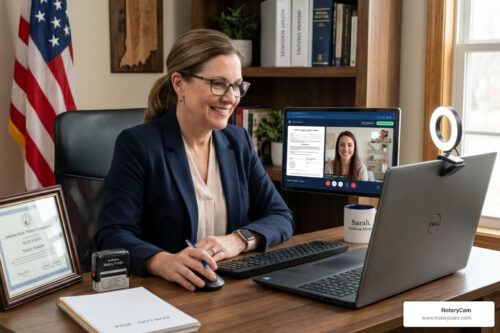
Remote Online Notarization allows documents to be notarized through secure, live video connections instead of in-person meetings. For many businesses, this approach can help address several of the pain points associated with traditional mobile notary services.
Note: RON is not legal in all states, and where it is permitted, specific requirements and regulations vary considerably. Before implementing RON in your business processes, consult with legal counsel familiar with your state’s electronic notarization laws.
How RON Can Support Business Operations
Here’s how RON often helps businesses streamline their document workflows:
Increased accessibility: Your clients or employees can connect from anywhere with internet access, whether they’re across town or across the country. This can be particularly helpful for businesses with remote teams or clients in multiple locations.
Time efficiency: RON sessions often happen much faster than coordinating in-person meetings. Many platforms can connect signers with notaries in minutes rather than days, which may help reduce bottlenecks in time-sensitive transactions.
Cost predictability: RON platforms typically offer clearer, more consistent pricing structures compared to mobile notaries whose fees can vary based on distance, timing, and other factors. This can help businesses budget more accurately for notarization expenses.
Audit trail capabilities: RON platforms generally create comprehensive digital records of each notarization session, including secure video recordings and tamper-evident digital seals. This documentation can support compliance efforts and provide clear records if questions arise later.
Scalability: For businesses that handle high volumes of documents, RON can support growth without the logistical challenges of coordinating multiple mobile notaries across different locations and time zones.
Understanding RON Security
Security is obviously a major consideration when you’re dealing with legal documents. RON platforms typically use several layers of security that can help protect the integrity of the notarization process:
- Multi-factor identity verification that often includes knowledge-based authentication questions and credential analysis
- Secure, encrypted video connections that help protect sensitive information during the session
- Tamper-evident digital certificates that can help detect if documents have been altered after notarization
- Comprehensive audit trails that document each step of the process
Platforms like NotaryCam are designed with these security measures in mind, helping businesses maintain document integrity while gaining the convenience of online notarization.
Important reminder: While RON platforms incorporate these security features, businesses should still evaluate whether RON is appropriate for their specific use cases and complies with their industry regulations and state laws.
Is RON Right for Your Business?
Whether you’re currently using mobile notaries or exploring notarization options for the first time, it’s worth considering how different approaches align with your business needs.
RON may be particularly beneficial if your business:
- Handles frequent document notarizations that create scheduling bottlenecks
- Works with clients or employees in multiple geographic locations
- Needs faster turnaround times for time-sensitive documents
- Wants more predictable notarization costs
- Could benefit from comprehensive digital audit trails
- Is looking to modernize document workflows and reduce friction in customer experiences
That said, mobile notaries still make sense in certain situations, particularly when state laws require in-person notarization or when signers prefer face-to-face interactions.
Getting Started with Modern Notarization Solutions
The notarization world has evolved significantly, giving businesses more options than ever before. Understanding what is a mobile notary (and how that compares to newer alternatives like RON) can help you make informed decisions about which approach best supports your operations.
If you’re ready to explore how online notarization might fit into your business processes, platforms like NotaryCam offer various solutions tailored to different business needs, from enterprise software licensing to contract notary services.
Remember: the “right” notarization solution depends on your specific circumstances, state regulations, and business requirements. Taking time to evaluate your options and consult with legal professionals can help ensure you’re choosing an approach that’s both compliant and effective for your organization.
Frequently Asked Questions About Mobile Notaries and RON
What is a mobile notary and how do they differ from regular notaries?
A mobile notary is a commissioned notary public who travels to your location to perform notarization services in person, rather than requiring you to visit a fixed office location. While they perform the same notarial acts as traditional notaries (such as administering oaths, witnessing signatures, and verifying identities), the key difference is convenience. Mobile notaries typically charge additional fees to cover their travel time and expenses, but they can save you time by coming to your office, home, or other preferred location.
How much does a mobile notary typically cost?
Mobile notary fees vary significantly based on several factors, including your state’s regulations, distance traveled, time of service, and urgency of the request. Many states set maximum fees for notarial acts themselves (often between $5-$15 per signature), but mobile notaries can charge separately for travel, which may range from $25 to $150 or more depending on distance and timing. After-hours, weekend, or same-day rush services often come with premium pricing. It’s worth noting that some states regulate travel fees while others allow notaries to set their own rates, so costs can differ considerably by location.
Is Remote Online Notarization (RON) legal in my state?
RON legality varies by state, and the regulations are continuously evolving. As of now, many states have enacted permanent RON legislation, while others may have temporary authorization or no RON laws at all. Additionally, each state that permits RON may have different requirements regarding technology standards, identity verification procedures, record retention, and which documents can be notarized remotely. Before implementing RON for your business, you should consult with legal counsel familiar with your state’s current notary laws to ensure compliance with local regulations.
Can RON be used for real estate closings and mortgage documents?
In states where RON is legally authorized, it can often be used for real estate transactions and mortgage documents, though this depends on both state law and individual lender or title company policies. Many financial institutions have adopted RON for closings because it can help streamline the process and accommodate clients who may be relocating or unable to attend in-person signings. However, some lenders or title companies may still prefer traditional in-person closings, and certain transaction types may have specific requirements. If you’re considering RON for real estate transactions, verify that it’s permitted in your state and accepted by all parties involved in the transaction.
How secure is Remote Online Notarization compared to in-person notarization?
RON platforms typically incorporate multiple security layers that can enhance document integrity. These often include multi-factor identity verification (using knowledge-based authentication questions and credential analysis), secure encrypted video connections, tamper-evident digital seals, and comprehensive audit trails that document the entire notarization session. Many security experts suggest that RON can actually provide stronger identity verification than traditional in-person notarization, since it combines multiple verification methods and creates detailed digital records. However, security depends on the specific platform being used and proper implementation of security protocols. Businesses should evaluate RON platforms carefully to ensure they meet industry security standards and comply with state requirements for electronic notarization.


 Your Privacy Choices